
An allergy represents an immunological overreaction in which mast cells and basophils release histamine in response to a typically harmless environmental protein. This reaction can range from mild skin irritation to severe systemic anaphylaxis, making accurate identification of the trigger a critical medical priority.
A patient’s history alone is often unreliable for distinguishing between true sensitization and a clinical allergy. Objective testing provides the clarity needed to separate coincidental reactions from genuine threats and guide effective treatment.
What are the different types of allergy tests? The choice of diagnostic method depends on factors such as the suspected allergen, the patient’s age, skin condition, and current medications. These procedures fall into distinct categories based on their mechanism of action and the type of hypersensitivity they are designed to detect.
- **Skin Prick Test **
This method functions as a primary diagnostic tool for immediate hypersensitivity reactions. It operates on the principle that a controlled introduction of an allergen into the superficial dermis will provoke a visible wheal-and-flare response in a sensitized individual.
The procedure offers rapid results and allows for the simultaneous evaluation of multiple allergens in a single clinical encounter
Procedure and Technique
-
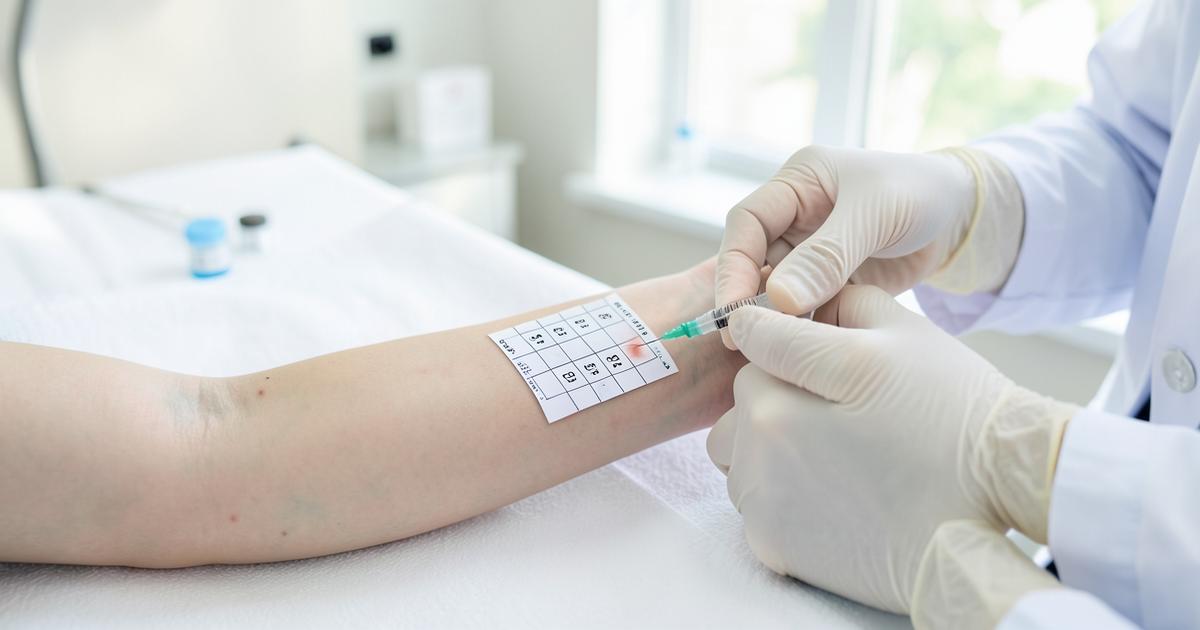
The test begins with the application of individual glycerinated allergen extracts to the volar forearm or the upper back.
-
A sterile lancet passes through each droplet to create a superficial epidermal puncture that introduces the extract to the dermal mast cells.
-
A negative control, typically glycerinated saline, and a positive control, usually histamine, accompany the allergen panel to validate skin reactivity.
-
The entire application process takes only a few minutes and generates a standardized grid for later measurement.
Interpretation of Results
A positive reaction appears as a distinct wheal surrounded by erythema, with the wheal diameter measured 15 minutes after the puncture. A wheal at least 3 millimeters larger than the negative control site typically indicates the presence of specific IgE antibodies to that allergen.
False positives can occur due to dermatographism or irritant reactions that do not correlate with clinical symptoms. False negatives may arise from improper technique, medication interference, or degradation of the allergen extract.
Limitations and Clinical Context
A positive skin prick test indicates sensitization but does not alone confirm clinical allergy. The result must correlate with a clear history of symptoms upon exposure to the suspected allergen.
The test carries a small but non-zero risk of a systemic reaction, particularly in patients with poorly controlled asthma or a history of severe anaphylaxis. For this reason, the procedure requires a clinical setting equipped to manage acute allergic emergencies.
- **Intradermal Skin Test **
This method introduces a larger volume of allergen directly into the dermal layer to provoke a more sensitive reaction than the epidermal puncture technique.** It serves as a secondary step when skin prick testing yields negative or equivocal results despite a strong clinical suspicion of allergy.**
The increased sensitivity of this approach comes with a higher risk of inducing a systemic reaction. For this reason, clinicians typically reserve it for specific scenarios where the diagnostic benefit outweighs the potential for an adverse event.
Procedure and Technique
-
A small gauge syringe delivers approximately 0.02 to 0.05 milliliters of diluted allergen solution intradermally on the upper arm.
-
The injection creates a small superficial bleb roughly 3 millimeters in diameter that elevates the skin surface.
-
The same panel of allergens used in a prior skin prick test often carries over to this method but at significantly diluted concentrations.
-
A histamine positive control and a saline negative control accompany the allergens to establish proper reactivity baselines.
Interpretation of Results
The test site undergoes evaluation at 15 to 20 minutes post-injection for wheal formation and surrounding erythema.** A positive result presents as a wheal that grows from the initial 3 millimeter bleb to 8 millimeters or more with accompanying flare.**
Grading systems exist to standardize the reaction intensity but do not correlate with the severity of clinical symptoms. A positive intradermal response in the absence of a positive skin prick test requires careful correlation with the patient history to avoid overdiagnosis.
Common Applications
Venom allergy from stinging insects like bees, wasps, and hornets represents the primary indication for this testing method. Skin prick tests for venom can produce false negatives, making the more sensitive intradermal approach necessary for accurate diagnosis.
Penicillin and other drug allergies also frequently require intradermal testing when the clinical history suggests a true IgE-mediated reaction. The procedure follows a graded protocol where negative skin prick tests precede intradermal administration to minimize risk.
- **Patch Test **
This diagnostic method evaluates delayed-type hypersensitivity reactions mediated by T cells rather than IgE antibodies. It identifies allergens responsible for allergic contact dermatitis, a condition where inflammation appears hours or days after skin exposure.
Unlike skin prick or intradermal testing which yield results within minutes, this technique requires multiple clinic visits over several days. The delayed reading schedule accommodates the slower immunological cascade characteristic of type IV hypersensitivity reactions.
Procedure and Technique
-
Small chambers containing the suspected allergens adhere to the upper back with hypoallergenic tape.
-
A typical panel includes 30 to 80 individual substances ranging from metals and preservatives to fragrances and topical medications.
-
The patient wears the patches for 48 hours during which the back remains dry and free from physical disturbance.
-
Strenuous activity that produces excessive sweating can compromise adhesion and alter the concentration of allergens against the skin.
Reading Schedule and Interpretation
The initial removal and reading occur at the 48 hour mark when the clinician assesses each site for erythema, edema, and vesicle formation. A second reading takes place at 96 hours or later because some reactions require additional time to fully manifest.
Positive reactions receive a standardized grade from 1 to 3 based on the intensity of the cutaneous response. A grade 1 reaction shows faint erythema with possible papules while a grade 3 presents with spreading erythema, edema, and coalescing vesicles.
Common Allergens Detected
Nickel sulfate** ranks as the most frequently identified contact allergen due to its prevalence in jewelry, belt buckles, and electronic devices**. Fragrance mixes and preservatives like methylisothiazolinone account for a substantial portion of positive reactions in personal care product allergies.
Topical antibiotics such as neomycin and bacitracin represent common iatrogenic sources of contact dermatitis. Rubber accelerators found in gloves, footwear, and elastic bands frequently trigger reactions in occupational and household settings.
- **Blood Test **
This method quantifies the presence of specific immunoglobulin E antibodies in the serum through laboratory analysis.** It measures the immune response to individual allergens without introducing any substance directly to the patient.**
The approach serves as an alternative when skin testing poses unacceptable risks or yields unreliable results. It provides objective data that complements clinical history though it does not replicate the physiological conditions of an in vivo exposure.
Procedure and Technique
-
A phlebotomist draws a venous blood sample typically from the antecubital fossa and collects it in a serum separator tube.
-
The sample undergoes centrifugation to separate the serum which then undergoes analysis using immunoassay technology.
-
Fluorescence enzyme immunoassays represent the most widely used methodology for detecting allergen-specific IgE.
-
Results generate quantitative values measured in kilounits per liter that correlate with the likelihood of clinical reactivity.
Indications for Use
**Patients with severe dermatological conditions such as extensive eczema or dermatographism may not tolerate the physical manipulation required for skin testing. **The blood test circumvents the need for intact healthy skin and eliminates the risk of inducing a skin reaction.
Individuals who cannot safely discontinue antihistamines or other interfering medications also benefit from this alternative. The test carries no risk of triggering an anaphylactic reaction which makes it the preferred choice for patients with a history of severe systemic responses.
Interpretation of Results
Laboratories report results in standardized classes ranging from 0 to 6 with higher values indicating greater concentrations of specific IgE**. A class 0 result suggests no detectable antibodies while a class 6 represents very high levels of sensitization.**
A positive result does not guarantee that exposure will produce clinical symptoms. The predictive value of the quantitative value varies by allergen with some foods showing clearer thresholds for reaction probability than others.
- **Oral Food Challenge **
This procedure establishes the definitive diagnosis of food allergy by directly administering the suspected food under controlled conditions. It determines not only whether a true allergy exists but also the threshold at which a reaction occurs.
The method carries inherent risk because it intentionally exposes the patient to a potential allergen. Medical supervision with immediate access to emergency interventions distinguishes this procedure from at-home food trials.
Procedure and Technique
-
The patient receives gradually increasing doses of the food at predetermined intervals typically ranging from 15 to 30 minutes apart.
-
The starting dose is small enough to minimize reaction risk while subsequent doses escalate to reach a cumulative serving comparable to a normal portion.
-
A physician with experience in managing anaphylaxis oversees the entire challenge which takes several hours to complete.
-
Intravenous access may be established before the procedure for patients with a history of severe reactions or uncontrolled asthma.
Indications for Use
Clinicians employ this test when skin prick or blood test results conflict with the clinical history or each other. It serves to confirm whether a food allergy has been outgrown particularly for milk, egg, wheat, and soy which show higher rates of resolution over time.
The procedure also helps distinguish between a true IgE-mediated allergy and other conditions such as oral allergy syndrome or food protein induced enterocolitis syndrome. It provides clarity when the patient experiences symptoms that do not align clearly with a single allergen.
Protocol Variations
Open challenges involve both the patient and the clinician knowing the food being administered. Single-blind or double-blind placebo controlled challenges remove bias when subjective symptoms or anxiety influence the outcome.
A placebo dose identical in appearance and texture to the active food allows for comparison in blinded protocols. The challenge continues through all planned doses unless the patient develops objective symptoms that meet predefined stopping criteria.
My Allergy Test Was Negative But I Still Have Symptoms
The selection of an allergy test requires a tailored approach that matches the suspected reaction and the patient’s individual characteristics.** A negative result does not rule out allergy because testing only evaluates specific IgE-mediated pathways or contact allergens.**
Patients with symptoms despite negative results may have non-allergic conditions such as mast cell disorders, vasomotor rhinitis, or irritant contact dermatitis. Clinical history remains the cornerstone of diagnosis, while testing helps confirm or rule out suspected triggers.
Negative results can also result from medication interference, poor allergen selection, or testing done outside the reaction window. A thorough clinical review often reveals the correct diagnosis when initial testing is inconclusive.